Appleton's Cyclopedia of American Biography, edited by James
Grant Wilson, John Fiske and Stanley L. Klos. Six volumes, New York: D. Appleton
and Company, 1887-1889 and 1999. Virtualology.com warns that these 19th Century
biographies contain errors and bias. We rely on volunteers to edit the historic
biographies on a continual basis. If you would like to edit this biographyplease
submit a rewritten biography in text form.
If acceptable, the new biography will be published above the 19th Century
Appleton's Cyclopedia Biography citing the volunteer editor
Virtual American Biographies
Over 30,000 personalities
with thousands of 19th Century illustrations, signatures, and exceptional life
stories. Virtualology.com
welcomes editing and additions to the
biographies. To become this site's editor or a contributor
Click Here
or e-mail Virtualology here.
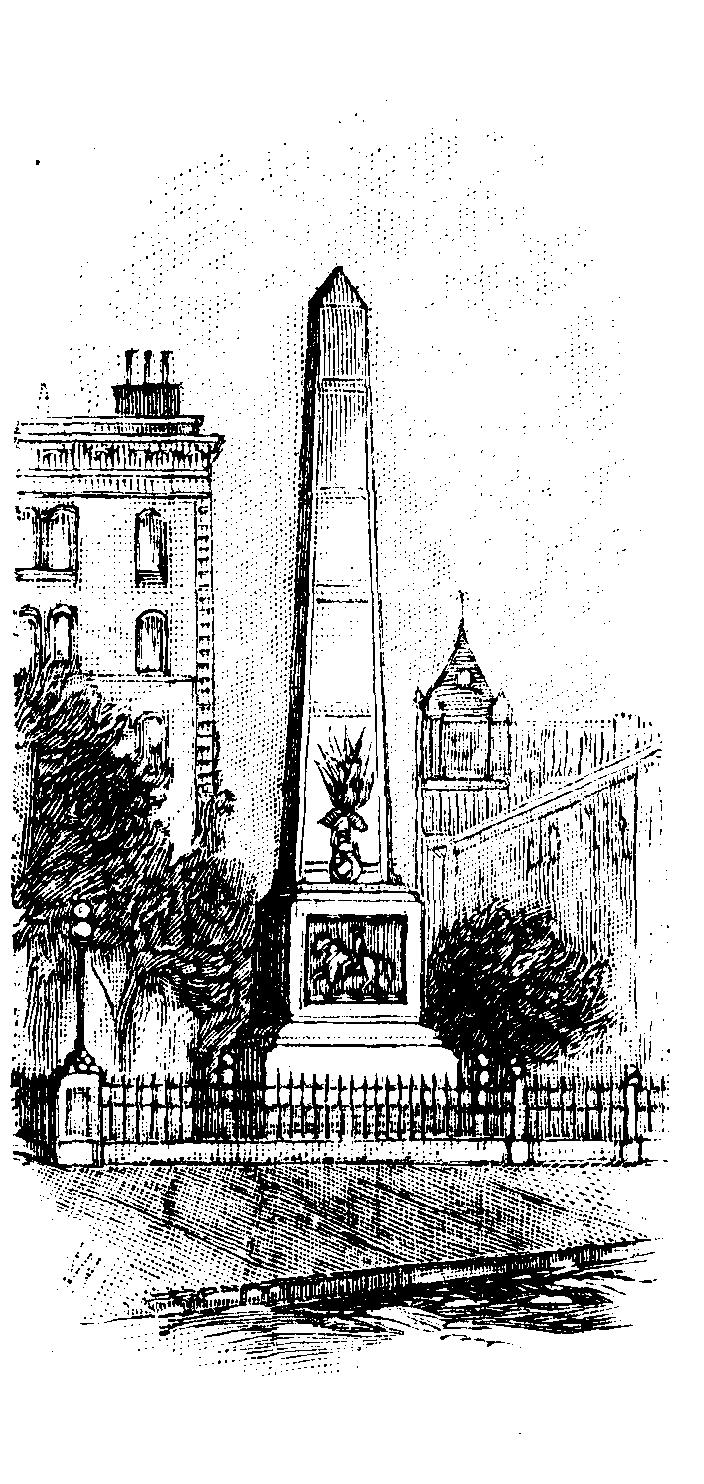
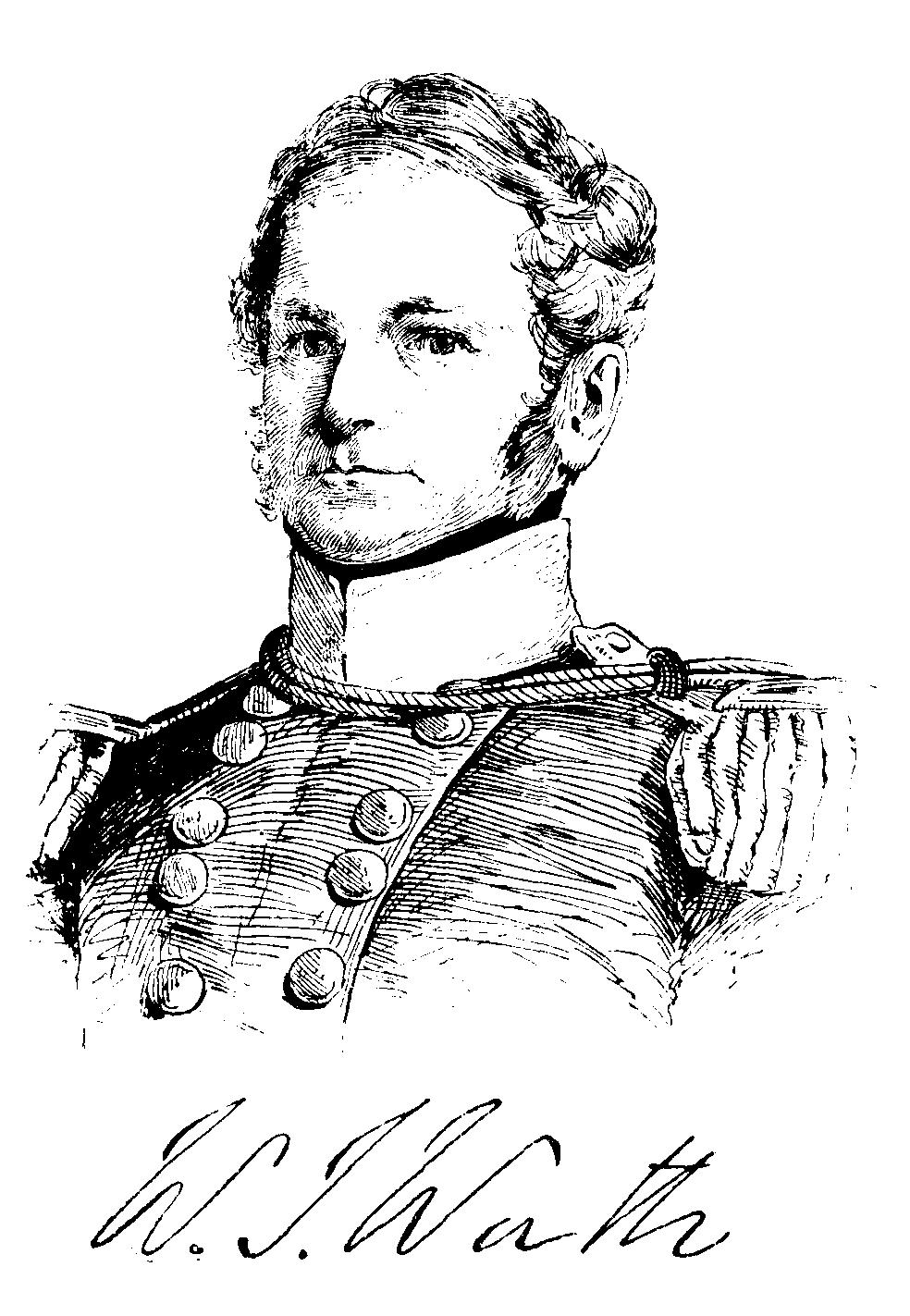
WORTH, William Jenkins, soldier, born in Hudson, New York, 1 March, 1794; died in San Antonio, Texas, 17 May, 1849. He was of Quaker ancestry, and of a family that produced many well-known men, among others Judge John Worth Edmunds, Gorham Worth, and Lawrence Worth, president of the Park bank. Young Worth received only a common-school education, and in early life entered a store in Hudson, whence he soon removed to Albany, where he continued in mercantile pursuits till he was eighteen years of age. On the opening of war with Great Britain he applied for a commission in the army, and on 19 March, 1813, received the appointment of 1st lieutenant in the served as aide to General Winfield Scott, and for gallantry was promoted to the rank of captain, 19 August, 1814. In the battle of Niagara he again so distinguished himself as to receive the thanks of his general and the rank of major. At the close of the war he was appointed superintendent of the United States military academy, and in 1824 was brevetted lieutenant-colonel. In 1838 he became colonel of the 8th infantry. In the Florida war he was especially active, fighting the battle of Palaldaklaha, 19 April, 1842, in which the Seminoles were disastrously defeated. He was second in command to General Zachary Taylor at the opening of the war with Mexico, leading the van of his army, and being the first to plant, with his own hand, the flag of the United States on the Rio Grande. Under Taylor he conducted the negotiations for the capitulation of Matamoras, and by him was intrusted with the assault on the bishop's palace at Monterey. It was a hazardous undertaking, the cannon having to be dragged up precipitous cliffs, and throughout the action his troops were exposed to the heaviest fire, but he achieved it with a small loss of life, and escaped personal injury, though constantly on horseback passing from post to post during the entire action. He was subsequently ordered to from Vera Cruz to Mexico, having a principal part in the capture of the important city of Puebla, and being the first to enter the city of Mexico, where, with his own hand, he cut down the Mexican flag that waved from the National palace After the war he was placed in command of the Department of Texas, and there he died of cholera. He was a man of tall and commanding figure, and said to be the best horseman and handsomest man in the army. He was of a manly, generous nature, and possessed talents that would have won him distinction in any sphere of action. He was brevetted major-general for his services at Monterey, and given swords by congress, the states of New York and Louisiana, and his native county, Columbia. A monument was erected to his memory by the city of New York at the junction of Broadway and Fifth avenue. (See vignette.)--Thomas, caricaturist, born in New York, 12 February, 1831, is the son of a cousin of General William J. Worth. He was with his father in banking business for a few years after leaving school, but soon devoted himself entirely to art. He first came prominently before the public in 1862, with his illustrations to "Plutarch Restored." He illustrated also some of the books of " Orpheus C. Kerr," the edition of Dickens's " Old Curiosity Shop" that was published by the Harpers in 1878, and numerous other works. He is best known to the general public by his lithographed caricatures, many of them on sporting subjects or scenes in negro life; and he has furnished pictures for every illustrated paper of note in the country. At present he is on the staff of "Texas Siftings."
Unauthorized Site:
This site and its contents are not affiliated, connected,
associated with or authorized by the individual, family,
friends, or trademarked entities utilizing any part or
the subject's entire name. Any official or affiliated
sites that are related to this subject will be hyper
linked below upon submission
and Evisum, Inc. review.
Please join us in our mission to incorporate The Congressional Evolution of the United States of America discovery-based curriculum into the classroom of every primary and secondary school in the United States of America by July 2, 2026, the nation’s 250th birthday. , the United States of America: We The
People. Click Here