Appleton's Cyclopedia of American Biography, edited by James
Grant Wilson, John Fiske and Stanley L. Klos. Six volumes, New York: D. Appleton
and Company, 1887-1889 and 1999. Virtualology.com warns that these 19th Century
biographies contain errors and bias. We rely on volunteers to edit the historic
biographies on a continual basis. If you would like to edit this biographyplease
submit a rewritten biography in text form.
If acceptable, the new biography will be published above the 19th Century
Appleton's Cyclopedia Biography citing the volunteer editor
Virtual American Biographies
Over 30,000 personalities
with thousands of 19th Century illustrations, signatures, and exceptional life
stories. Virtualology.com
welcomes editing and additions to the
biographies. To become this site's editor or a contributor
Click Here
or e-mail Virtualology here.
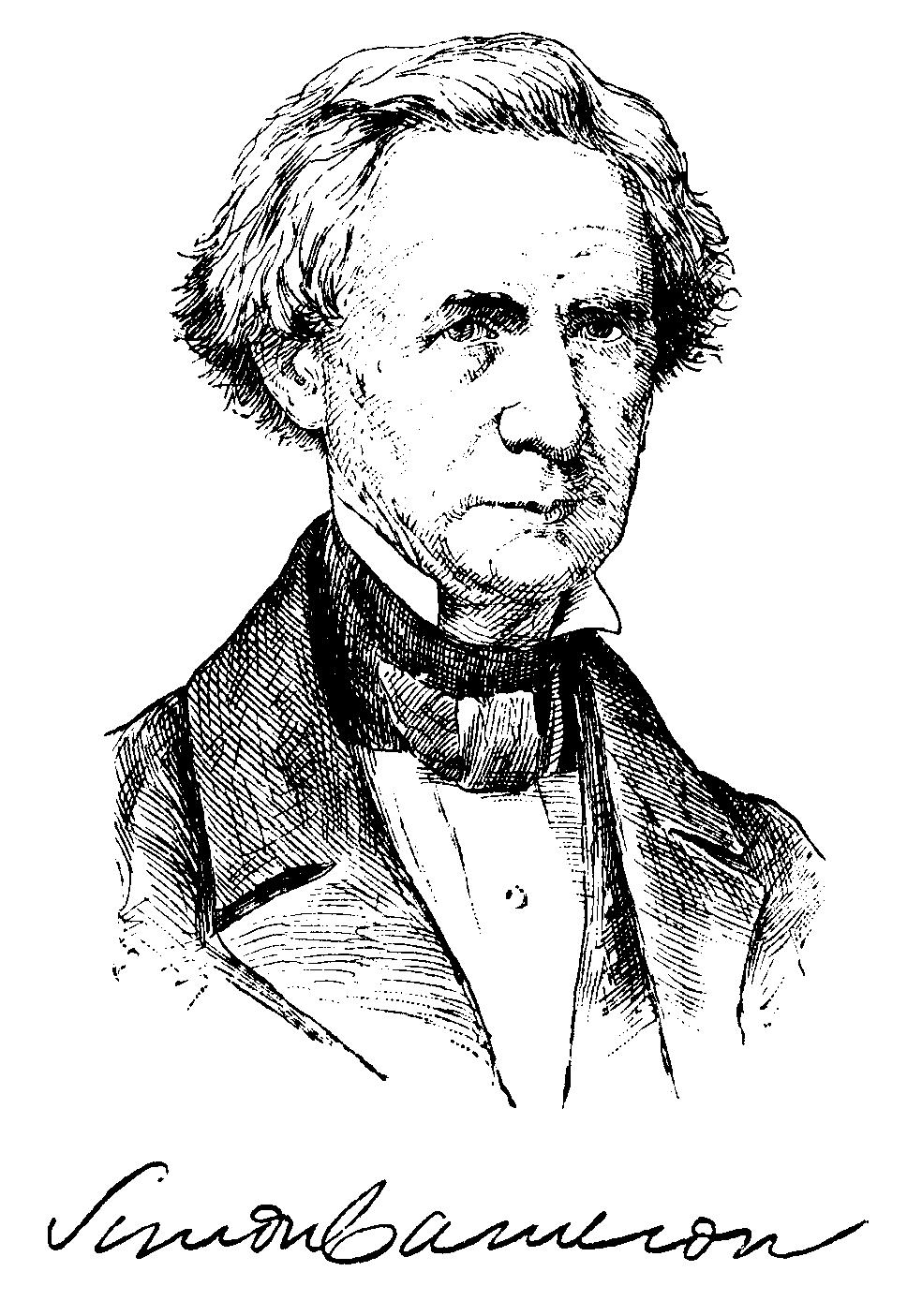
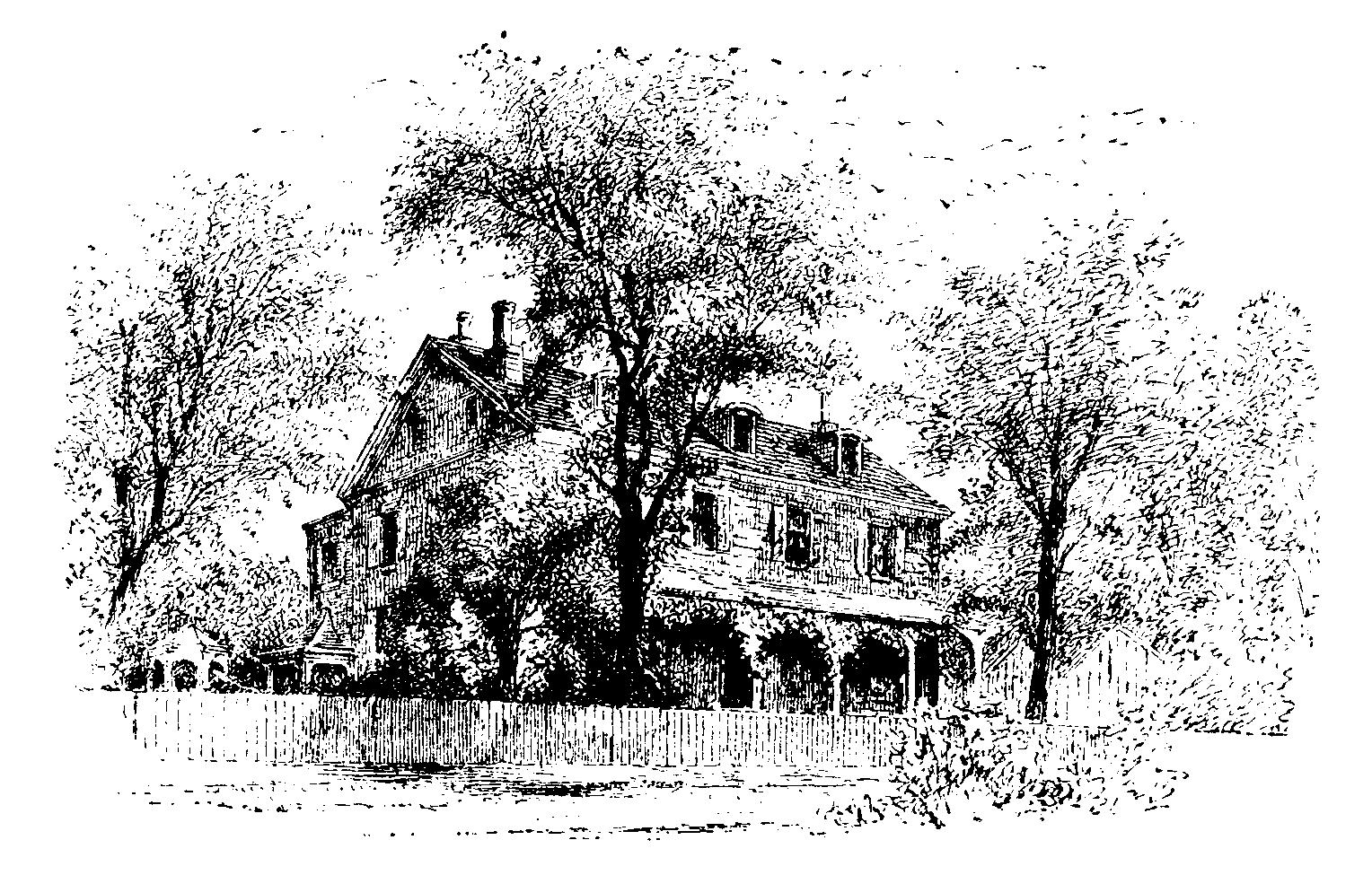
CAMERON, Simon, statesman, born in Lancaster County, Pennsylvania, 8 March, 1799. He was left an orphan at an early age, but received a fair English education, and began to learn the printer's trade when nine years of age. He worked as a journeyman in Lancaster, Harrisburg, and Washington, and so improved his opportunities that in 1820 he, was editing a newspaper In Doylestown, Pennsylvania, and in 1822 one in Harrisburg. As soon as he had accumulated sufficient capital he became interested in banking and in railroad construction in the cen- tral part of the state. He was for a time adjutant-general of Pennsylvania. He was elected to the United States senate in 1845 for the term ending in 1849, and during this period acted with the democrats on important party questions, such as the Missouri compromise bill. This was repealed in 1854, and Mr. Cameron became identified with the "people's party," subsequently merged with the republicans. As its candidate he was re-elected to the senate for the full term of six years beginning in 1857, a period that covered the exciting crisis of secession. During this time he was so earnest an advocate of peace that his loyalty was suspected. At the republican convention that nominated Abraham Lincoln he was strongly supported for the presidency, and again for the vice-presidency ; but lack of harmony in the Pennsylvania delegation prevented his nomination to the latter office. Mr. Lincoln at once called him to the cabinet as secretary of war, and he proved equal to the arduous duties of the place. He advocated more stringent and aggressive war measures than Mr. Lincoln was prepared to carry out, and when General Butler asked for instructions regarding fugitive slaves, directed him to employ them "under such organizations and in such occupations as exigencies may suggest or require." Similar instructions were given to General Sherman and other officers in the field. In the original draft of his annual report to congress, in December, 1861, he boldly advocated arming fugitive slaves; but this was modified, on consultation with the cabinet. Mr. Cameron resigned the secretaryship 11 January, 1862, was at once appointed minister to Russia, and his influence undoubtedly tended in a large measure to secure the friendship of that powerful nation during the civil war. His official conduct in a certain transaction was censured by the house of representatives, 30 April, 1862; but Mr. Lincoln immediately sent a message assuming, with the other heads of departments, an equal share in the responsibility. He resigned as minister to Russia 8 November, 1862, and remained at home until 1866, when he was elected United States senator, and appointed chairman of the committee on foreign affairs on the retirement of Mr. Sumner in 1872. He was sent to the senate for the fourth time in 1873, but resigned in favor of his son. During the years of his active public life he was a powerful political leader, practically dictating the policy of the Republican Party in Pennsylvania, and wielding a strong influence over its policy in the nation at large. The accompanying view represents "Lochiel," the residence at Harrisburg of the "Czar of Pennsylvania politics," as Cameron has been called.--His brother, James, soldier, born in Maytown, Lancaster County, Pennsylvania, 1 March, 1801; killed 21 July, 1861. At nineteen years of age he entered the printing-office of his brother Simon, at Harrisburg, and in 1827 removed to Lancaster and assumed the editorship of the "Political Sentinel," studying law in the mean time in the office of 510 CAMINATZIN James Buchanan. During the Mexican war he accompanied the volunteers of his state as sutler, in January, 1847. When the civil war began he was living in retirement upon his estate on the banks of the Susquehanna, but upon urgent entreaty accepted the appointment of colonel of the 79th (Highland) regiment of New York state militia. He was killed while gallantly leading his men in a charge at Bull Rum--Simon's son, James Donald, senator, born in Middletown, Dauphin County, Pennsylvania, 14 May, 1833, was graduated at Princeton, in 1852, entered the Middletown bank as clerk, became cashier, and afterward president. He was also president of the Northern Central railway company of Pennsylvania from 1863 until the road was leased by the Pennsylvania railroad in 1874, and in this place did good service to the national cause during the civil war. The road, although several times cut by the Confederates, was a means of communication between Pennsylvania and Washington, and after the war it was extended, under Mr. Cameron's administration, to Elmira, New York, so as to reach from the great lakes to tide-water. Mr. Cameron has since been connected with various coal, iron, and manufacturing industries in his state. He was secretary of war under President Grant from 22 May, 1876, till 3 March. 1877, and was then chosen United States senator to fill the vacancy caused by his father's resignation. He was reelected in 1879, and again m 1885, for the term ending in 1891. He was a delegate to the Chicago republican conventions of 1868 and 1880, and chairman of the national republican committee in the latter year.
Unauthorized Site:
This site and its contents are not affiliated, connected,
associated with or authorized by the individual, family,
friends, or trademarked entities utilizing any part or
the subject's entire name. Any official or affiliated
sites that are related to this subject will be hyper
linked below upon submission
and Evisum, Inc. review.
Please join us in our mission to incorporate The Congressional Evolution of the United States of America discovery-based curriculum into the classroom of every primary and secondary school in the United States of America by July 2, 2026, the nation’s 250th birthday. , the United States of America: We The
People. Click Here