Appleton's Cyclopedia of American Biography, edited by James
Grant Wilson, John Fiske and Stanley L. Klos. Six volumes, New York: D. Appleton
and Company, 1887-1889 and 1999. Virtualology.com warns that these 19th Century
biographies contain errors and bias. We rely on volunteers to edit the historic
biographies on a continual basis. If you would like to edit this biographyplease
submit a rewritten biography in text form.
If acceptable, the new biography will be published above the 19th Century
Appleton's Cyclopedia Biography citing the volunteer editor
Virtual American Biographies
Over 30,000 personalities
with thousands of 19th Century illustrations, signatures, and exceptional life
stories. Virtualology.com
welcomes editing and additions to the
biographies. To become this site's editor or a contributor
Click Here
or e-mail Virtualology here.
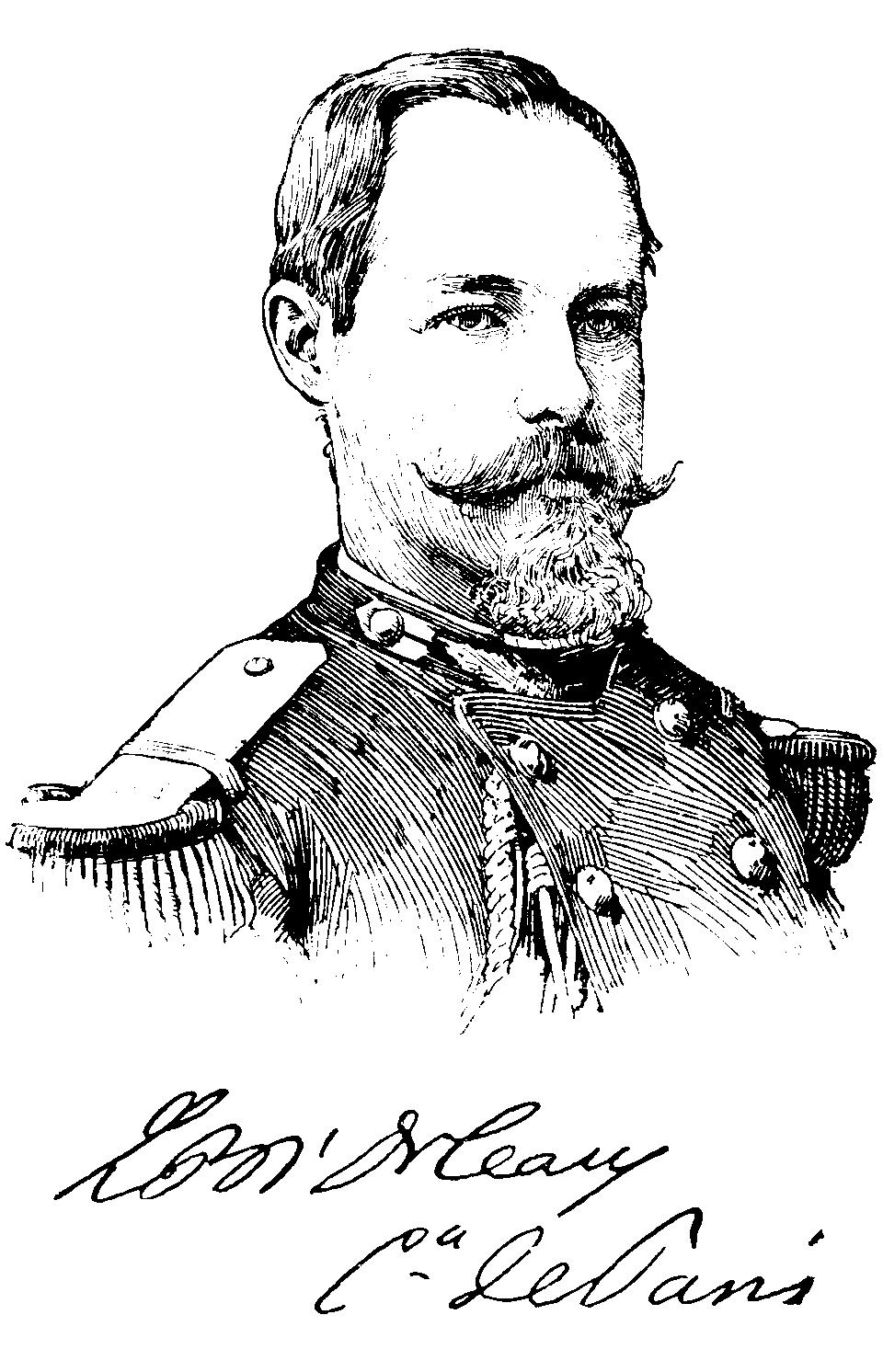
ORLEANS, Louis Philippe d', king of the French, born in Paris, France, 6 October, 1773; died in Claremont, England, 26 AUG., 1850. He was educated by Mine. de Genlis, embraced the doctrines of the French revolution with his father, who exchanged his title of Duke d'Orleans for the name Philippe EgalitS, and performed brilliant services in the revolutionary army. Becoming involved in the schemes of Charles F. Dumouriez, he escaped with that general, and for several months taught mathematics and Geography in a school at Reichenau. Switzerland. After his father was beheaded he travelled under an assumed name in northern Europe, and on 24 September, 1796, took passage as a Danish subject on the ship " America," and landed in Philadelphia on 21 October He was joined by his brothers, the Duke de Montpensier and the Count de Beaujolais, and made a tour through the United States, travelling through the New England states, exploring the great lakes and the valley of the Mississippi, and visiting Washington at Mount Vernon in 1797. They set out for Spain after their mother was released and took up her residence at Madrid, but were detained by the Spanish authorities at Havana, and compelled to sail for the United States. He returned with his brothers to Europe in 1800, attempted to stir up insurrections in Spain, and resided in Twickenham, near London, until he was permitted to return to France in 1817. He was a leader of the revolution of July, 1830, was elected king of the French, and reigned until he was compelled to abdicate in favor of his grandson, the Count of Paris, in consequence of the revolution of February, 1848.--His son, Francois Ferdinand Philippe Louis Marie, Prince de Joinville, born in Neuilly, 14 August, 1818, entered the navy when very young was commissioned as 1st lieutenant (1836) to the Mediterranean squadron under Admiral Hugon, and landed (1837)at Bona to join his brother, .the Duke of Nemours, in his attack on Constantine, but arrived after the city had already fallen, ***t18 was intrusted with the mission of obtaining reparation from the government of Mexico, and assisted, as commander on board the frigate " La Creole," at the bombardment of San Juan de Ulua (27 November, 1838), and a few days afterward, at the head of a landing force of sailors, he forced the gates of Vera Cruz, and, despite a galling fire, took with his own hand the Mexican general Arista. For his brilliant conduct on this occassion he was rewarded with the cross of the Legion of honor and the rank of full captain. In 1840 he received the command of the ships commissioned to transport the remains of Napoleon I. from St. Helena to France. In 1843 he married in Brazil the Princess Francesca da ***Bragan(;a, sister of the Emperor Pedro II., and was appointed (1844) rear-admiral and a member of the council of admiralty. He commanded in 1845 the French fleet operating against Morocco, bombarded (6 August) Tangiers, took Mogador (15 August), and was raised to the rank of vice-admiral. At the outbreak of the revolution (1848) he, together with his brother, the Duke of Nemours, was still serving in Algiers, but then resigned his command, and retired to England to join his exiled father and family. At the'beGinning of the war of secession he came to the United States (in 1861), and, leaving his son, the Duke of Penthievre, in the naval academy of Annapolis, with his two nephews, the Count of Paris and the Duke of Chartres, joined the staff of General McClellan and took an active part in the Chicka-hominy campaign, returning to England in 1862.
He has contributed to the "Revue des deux mondes " many articles, some of which have been reprinted in pamphlet-form. Among these are "Notes sur l'etat des forces navales de la France " (1844)" " Etude sur l'eseadre de la Mediterranee " (1852)" " La guerre de la Chine" (1857)" and "La guerre d'Amerique, campagne du Potomac "(1863). One of his articles, published in 1865, is a study of the fleet of the United States as compared with that of France. To him also is attributed an article on the battle of Sadowa, published (1868)under the signature of Louis Buloz in the "Revue des deux mondes," the conclusions of which were directed against the new military law. After the fall of the empire he returned to France, was elected in 1871 to the national assembly, and remained there till the decree of expulsion, when he accompanied the other princes to England.--Louis Philippe's grandson, Louis Albert Philippe, Count of Paris, son of the ***Due d'Orleans, born in Paris, France, 24 August, 1838, was educated by his mother, the Duchesse ***Hdl5ne, daughter of the grand duke of Mecklenburg-Schwerin, at Claremont, England. In the autumn of 1861 he and his brother, the Duke of Chatres, accompanied their uncle, the Prince de Joinville, to the United States. At the invitation of General George B McClellan, the young princes entered the military service of the United States, and were attached the rank of captains in the volunteer army. They stipulated that they should receive no pay, and should be free to resign their commissions whenever they desired. They served on General McClellan's staff till the close of the *Virginia campaign and the retreat of the Army of the Potomac in June, 1862, when they returned to Europe. While in the field they frequently volunteered on detached expeditions. At Gaines's Mills they displayed courage and zeal in conveying despatches, and in efforts to reform the line of battle. After the establishment of a republic in France he resided in Paris. Since the death of the Count of Chambord in 1883 he has been acknowledged by the great majority of the Legitimists as the heir to the throne of the Bourbons. In 1886 the expulsion bill drove him again into exile, and he returned to England to reside, he is the author, besides a book on "Trade Unions in England" (1869), of a work not yet completed, entitled "Histoire de la guerre civile en Amerique" (8 vols., Paris, 1874-'87). A translation by Louis F. Tasistro, the first three volumes of which were edited by Henry Coppde and the last by Colonel John P. Nicholson, has been published under the title of " History of the Civil War in America" (Philadelphia, 1875-'88).--Robert Philippe Louis Eugene Ferdinand, Duke of Chartres, soldier, brother of the Count of Paris, born in Paris, France, 9 November, 1840, was brought up by his mother in Eisenach, Germany, and in England, studied in the military school at Turin, Italy, served in the war against Austria in 1859, and in August, 1861, came with his brother to the United States. While with the Army of the Potomac he performed various daring services. During the seven days' fight before Richmond he brought in seventeen prisoners on the eve of the battle of Williamsburg. After returning to Europe he married his cousin, the eldest daughter of the Prince de Joinville. Subsequent to the fall of Sedan he joined General Auguste Chanzy's staff under the assumed name of Robert le Fort, and fought with signal bravery during the rest of the war. He was appointed a major in the French army in 1871, but in 1883 his name was stricken from the rolls by a decree of the government, and in 1886 he went into exile with the other royal princes.--Another grandson, Louis Philippe Marie Ferdinand Gaston, Count d'Eu, soldier, born in Neuilly, France, 28 April, 1842, is the son of the Due de Nemours, Louis Philippe's second son. He was brought up in exile, educated in England, and entering the military service of Spain in December, 1859, served in Morocco on the staff of Field-Marshal O'Donnell, and was decorated on the field of battle for bravery. He next entered the artillery college at Segovia, and was graduated in April, 1863. He was promoted captain shortly afterward, and served in various regiments till February, 1864, when he was compelled by illness to take leave of absence. On 15 October, 1864, he married at Rio Janeiro the princess imperial Donna Isabel de Braganca, eldest daughter and heiress presumptive to Dora Pedro II., emperor of Brazil. He was made a field-marshal in the Brazilian army in July, 1865, and took part on the emperor's staff in the successful campaign of that year against Paraguay. On 22 March, 1869, he was appointed commander-in-chief of all the Brazilian forces on land and water, which since 1864 had been at war with Francisco Solano Lopez (q. v.), president of the republic of Paraguay. He assumed the command at Luque, a village near Asuncion, on 16 April, 1869. By a series of successful manoeuvres the enemy were driven from their positions, nearly the whole of the Paraguayan territory was occupied, and Lopez being killed the war was ended. The Count d'Eu, by order of the government of the emperor, gave up the command-in-chief of the forces on 16 April, 1870, and returned to Rio Janeiro on 29 April. He has held since November, 1865, except while on leave of absence, the post of commander-general of the Brazilian artillery, and president of various commissions. In 1874-'6 he presided over the Brazilian national exhibition commission for arranging the exhibition at Rio Janeiro in 1875 and selecting exhibits for the Centennial exhibition at Philadelphia. In 1883 he was president of a committee for calling a general conference on the improvement of education. Owing to financial and legislative difficulties, the intended conference did not take place, but the labors of the committee resulted in the collecting and printing of a large number of reports that were prepared for the conference, as well as in the holding of an International pedagogic exhibition at Rio Janeiro on 29 July, 1883, and ultimately in the establishment of a National educational museum in the capital. Since 1867 he has been president of the Brazilian polytechnic institute, and since 1883 of the Society for providing shelter and education to destitute children through establishing agricultural asylums and of the National museum of education.--The Prince de Joinville's son, Pierre Philippe Jean Marie, Duke of Penthievre, naval officer, born in France, 4 November, 1845, was educated at the College of Edinburgh, and on 14 October, 1861, was admitted to the U. S, naval academy, then at Newport, Rhode Island, under the name of Pierre d'Orleans. He was graduated in 1863, and commissioned as acting ensign, but was on leave of absence during his fourteen months' service. Resigning his commission on 30 May, 1864, he served in the Brazilian navy for two years, and subsequently made a voyage round the world. After the return of his family to France, he served as an officer in the French navy until he was deprived of his commission by the decree against the princes.
Unauthorized Site:
This site and its contents are not affiliated, connected,
associated with or authorized by the individual, family,
friends, or trademarked entities utilizing any part or
the subject's entire name. Any official or affiliated
sites that are related to this subject will be hyper
linked below upon submission
and Evisum, Inc. review.
Please join us in our mission to incorporate The Congressional Evolution of the United States of America discovery-based curriculum into the classroom of every primary and secondary school in the United States of America by July 2, 2026, the nation’s 250th birthday. , the United States of America: We The
People. Click Here