Appleton's Cyclopedia of American Biography, edited by James
Grant Wilson, John Fiske and Stanley L. Klos. Six volumes, New York: D. Appleton
and Company, 1887-1889 and 1999. Virtualology.com warns that these 19th Century
biographies contain errors and bias. We rely on volunteers to edit the historic
biographies on a continual basis. If you would like to edit this biographyplease
submit a rewritten biography in text form.
If acceptable, the new biography will be published above the 19th Century
Appleton's Cyclopedia Biography citing the volunteer editor
Virtual American Biographies
Over 30,000 personalities
with thousands of 19th Century illustrations, signatures, and exceptional life
stories. Virtualology.com
welcomes editing and additions to the
biographies. To become this site's editor or a contributor
Click Here
or e-mail Virtualology here.
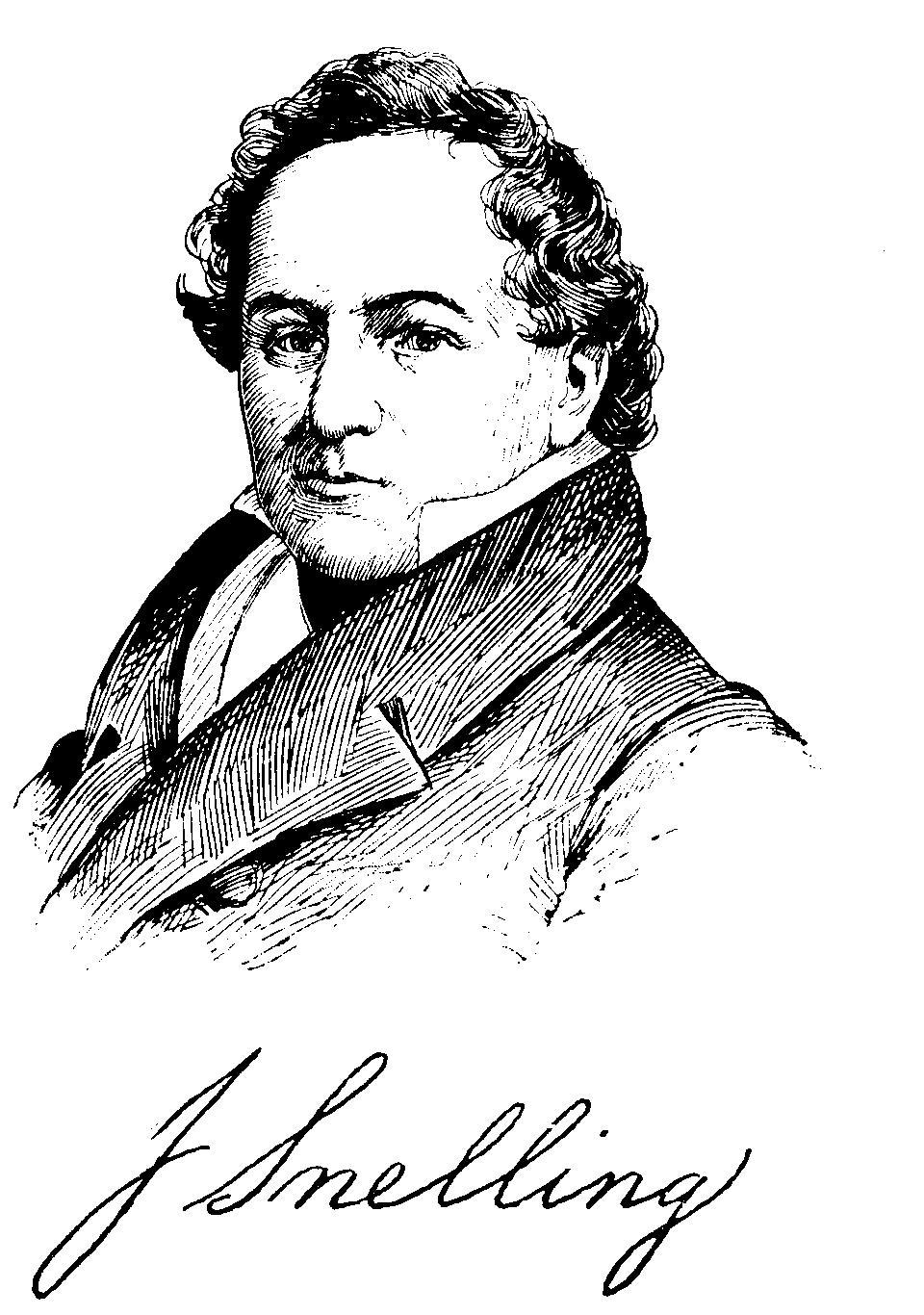
SNELLING, Josiah, soldier, born in Boston, Massachusetts, in 1782; died in Washington, D. C., 20 August, 1829. He joined a rifle company at the first call for troops for the war with Tecumseh, was appointed lieutenant in the 4th infantry in 1808, became a captain in June, 1809, served with credit at Tippecanoe, 7 November, 1811, and was brevetted major for services at Brownstown, 9 August, 1812. He became assistant inspector-general on 25 April, 1813, lieutenant-colonel of the 4th rifles on 21 February, 1814, inspector-general with the rank of colonel, 12 April, 1814, lieutenant-colonel of the 6th infantry in 1815, and colonel of the 5th infantry on 1 June, 1819. He participated in the battles of Lundy's Lane, Chippewa, and Fort Erie, and on his march to Detroit was captured by a force of British and Indians that was superior to his own. He escaped, with the loss of three or four men, to Fort Shelby, Detroit, where he became betrothed to Abigail, daughter of Colonel Thomas Hunt. On the night that had been appointed for his marriage he was sent by General William Hull with an inadequate detachment to cheek the landing of the British at Spring Well. On leaving the fort, he said to General Hull : "If I drive the Redcoats back, may I return and be married*." General Hull gave his consent, and the wedding took place on the same evening. At the surrender of Detroit he refused to raise the white flag. He was taken as a prisoner to Montreal, and while being marched through the streets was ordered by a British officer to take off his hat to Nelson's monument. This he refused to do in spite of the efforts of the soldiers to remove it, and finally General Isaac Brock ordered them to " respect the scruples of a braveman." He was appointed colonel of the 5th infantry on 1 June, 1819, was ordered to Council Bluffs, Maine, and thence to the confluence of the Mississippi and the Minnesota rivers. The location of the fort was removed to the present site of Fort Shelling, which he completed in 1824, after succeeding to the command. He gave it the name of Fort St. Anthony, which was changed by General Winfield Scott in honor of its builder and commander. Major Snelling always carried the sword of Charles Carroll of Carroll-ton, which had been presented to him. He was a witness against General William Hull at the latter's trial, and wrote "Remarks on General William Hull's Memoirs of the Campaign of the Northwestern, Army, 1812" (Detroit, 1825).--His son, William Joseph, journalist, born in Boston, Massachusetts, 26 December. 1804; died in Chelsea, Massachusetts, 24 December, 1848, was educated at the United States military academy, became a fur-trapper in Missouri, and subsequently was employed at the Galena lead-mines. About 1828 he became connected with several journals, and for a few years before his death he was editor of the Boston " Herald." He contributed to periodicals, and published "The Polar Regions of the Western Continent Explored" (Boston, 1831), and "Truth, a New-Year's Gift for Scribblers: a Satirical Poem " (1832). He wrote for William Apes, the Pequod Indian preacher, a small book on " Indian Nullification" (1835).--Another son, Henry Hunt, editor, born in Plattsburg, New York, 8 November, 1817, was taken by his father to Council Bluffs, Maine, in infancy, and in early life suffered many hardships. He was educated at a military academy in Georgetown, D. C., and in Detroit, after which he entered business, and for a time was librarian of the New York lyceum. Owing to impaired health, he removed to the country, and settling in Cornwall, New York, in 1871, published and edited until 1887 the "Reflector of Cornwall," which he relinquished owing to blindness. He devoted much time to photography, and edited "The Photographic Art Journal" in New York in 1851-'3, and from 1854 till 1860 the "Photographic and Fine Art Journal." He is the author of "History and Practice of Photography" (New York, 1849), and has also published a '" Dictionary of the Photographic Art" (1853).
Unauthorized Site:
This site and its contents are not affiliated, connected,
associated with or authorized by the individual, family,
friends, or trademarked entities utilizing any part or
the subject's entire name. Any official or affiliated
sites that are related to this subject will be hyper
linked below upon submission
and Evisum, Inc. review.
Please join us in our mission to incorporate The Congressional Evolution of the United States of America discovery-based curriculum into the classroom of every primary and secondary school in the United States of America by July 2, 2026, the nation’s 250th birthday. , the United States of America: We The
People. Click Here