Appleton's Cyclopedia of American Biography, edited by James
Grant Wilson, John Fiske and Stanley L. Klos. Six volumes, New York: D. Appleton
and Company, 1887-1889 and 1999. Virtualology.com warns that these 19th Century
biographies contain errors and bias. We rely on volunteers to edit the historic
biographies on a continual basis. If you would like to edit this biographyplease
submit a rewritten biography in text form.
If acceptable, the new biography will be published above the 19th Century
Appleton's Cyclopedia Biography citing the volunteer editor
Virtual American Biographies
Over 30,000 personalities
with thousands of 19th Century illustrations, signatures, and exceptional life
stories. Virtualology.com
welcomes editing and additions to the
biographies. To become this site's editor or a contributor
Click Here
or e-mail Virtualology here.
FLETCHER, Benjamin, governor of New York, lived in the 17th century. Colonel Fletcher, who was a soldier of fortune, was appointed governor by William and Mary, and, after soliciting troops, presents for the Indians, and war stores, arrived in New York on 29 August 1692. He visited the Mohawk tribe, was entertained by the warriors, and learned their character and dialect. When Schuyler went to the relief of the Indians against the French, Fletcher joined him at Schenectady, on 17 February 1693, and assisted the Indians, who gave him the name of " Great White Arrow." During his administration the assembly granted the sum of £600 for the defense of the frontier. Fletcher had much difficulty in bringing the different colonial factions to an agreement. He said he ruled "a divided, contentious, and impoverished people." He endeavored to obtain control of the Connecticut militia, which had been improperly granted him in his commission; but the assembly of that colony refused to acknowledge his right, and sent Winthrop to England to lay the matter before the council, who decided in favor of Connecticut. In 1692, Colonel Fletcher received a commission from William and Mary to assume the government of Pennsylvania and "the annexed territories, which had been urged by the enemies of Penn as necessary for the safety of the colony.
He arrived in Philadelphia in April 1693, in great pomp, and the government was immediately surrendered to him. Annoyed by the subservience of Lloyd and Markham, Penn wrote to Fletcher cautioning him to "tread softly," as the territory and government were his. Fletcher summoned the assembly, and thus excited the opposition of the council, which protested against calling the legislature in defiance of the laws made by Penn. The assembly met, and Fletcher demanded money to defray the expenses incurred in the expedition against the French in Albany. This demands was fortified by a letter from Queen Mary, in which she expressed her will that all the colonies should contribute troops and money in defense of the frontier, according to the dictates of the governor of New York. A bill of a penny a pound for the support of the government, and a polltax of six shillings, which yielded over £700, was passed.
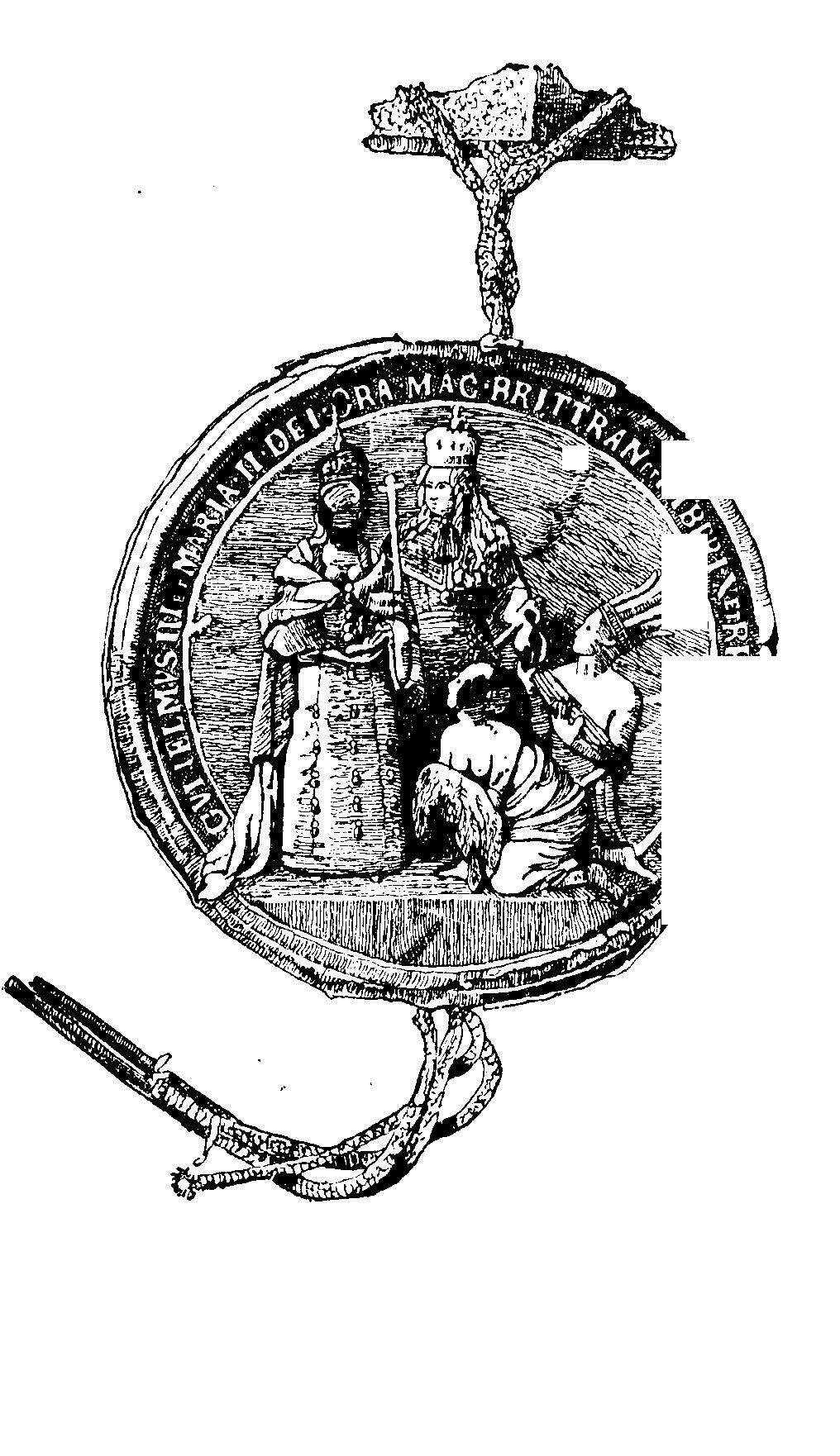
Fletcher appointed William Markham deputy governor, and then returned to his colony. He again met and addressed the assembly in the following year. During his stay in Pennsylvania he presided at the trial of the printer, William Bradford. Desirous of introducing printing into his colony, Fletcher took Bradford to New York, where he set up the first press, and printed the corporation laws. Fletcher was passionate, reckless, and avaricious, and was accused of paying little attention to the navigation laws, and of protecting piracy for his private gain. He denied this, but his association with Kidd and Tew, and the abundance of Arabian and East India goods in the colony, seemed to justify the suspicion. He was finally deposed, and Bellomont appointed in his stead. His zeal for the extension of the Anglican Church in the colony proved an era in the religious history of New York. He built a small chapel in the fort in 1693, for which the queen sent books, plate, and other furniture. This was burned in 1741, and little is known of its history. In 1697 a charter was granted for building a Church on " King's farm," which was called Trinity Church, and the present building of this name stands on the same ground. The seal and autograph are from a patent of City property granted to Samuel Bayard of New York in 1697.
Unauthorized Site:
This site and its contents are not affiliated, connected,
associated with or authorized by the individual, family,
friends, or trademarked entities utilizing any part or
the subject's entire name. Any official or affiliated
sites that are related to this subject will be hyper
linked below upon submission
and Evisum, Inc. review.
Please join us in our mission to incorporate The Congressional Evolution of the United States of America discovery-based curriculum into the classroom of every primary and secondary school in the United States of America by July 2, 2026, the nation’s 250th birthday. , the United States of America: We The
People. Click Here