Appleton's Cyclopedia of American Biography, edited by James
Grant Wilson, John Fiske and Stanley L. Klos. Six volumes, New York: D. Appleton
and Company, 1887-1889 and 1999. Virtualology.com warns that these 19th Century
biographies contain errors and bias. We rely on volunteers to edit the historic
biographies on a continual basis. If you would like to edit this biographyplease
submit a rewritten biography in text form.
If acceptable, the new biography will be published above the 19th Century
Appleton's Cyclopedia Biography citing the volunteer editor
Virtual American Biographies
Over 30,000 personalities
with thousands of 19th Century illustrations, signatures, and exceptional life
stories. Virtualology.com
welcomes editing and additions to the
biographies. To become this site's editor or a contributor
Click Here
or e-mail Virtualology here.
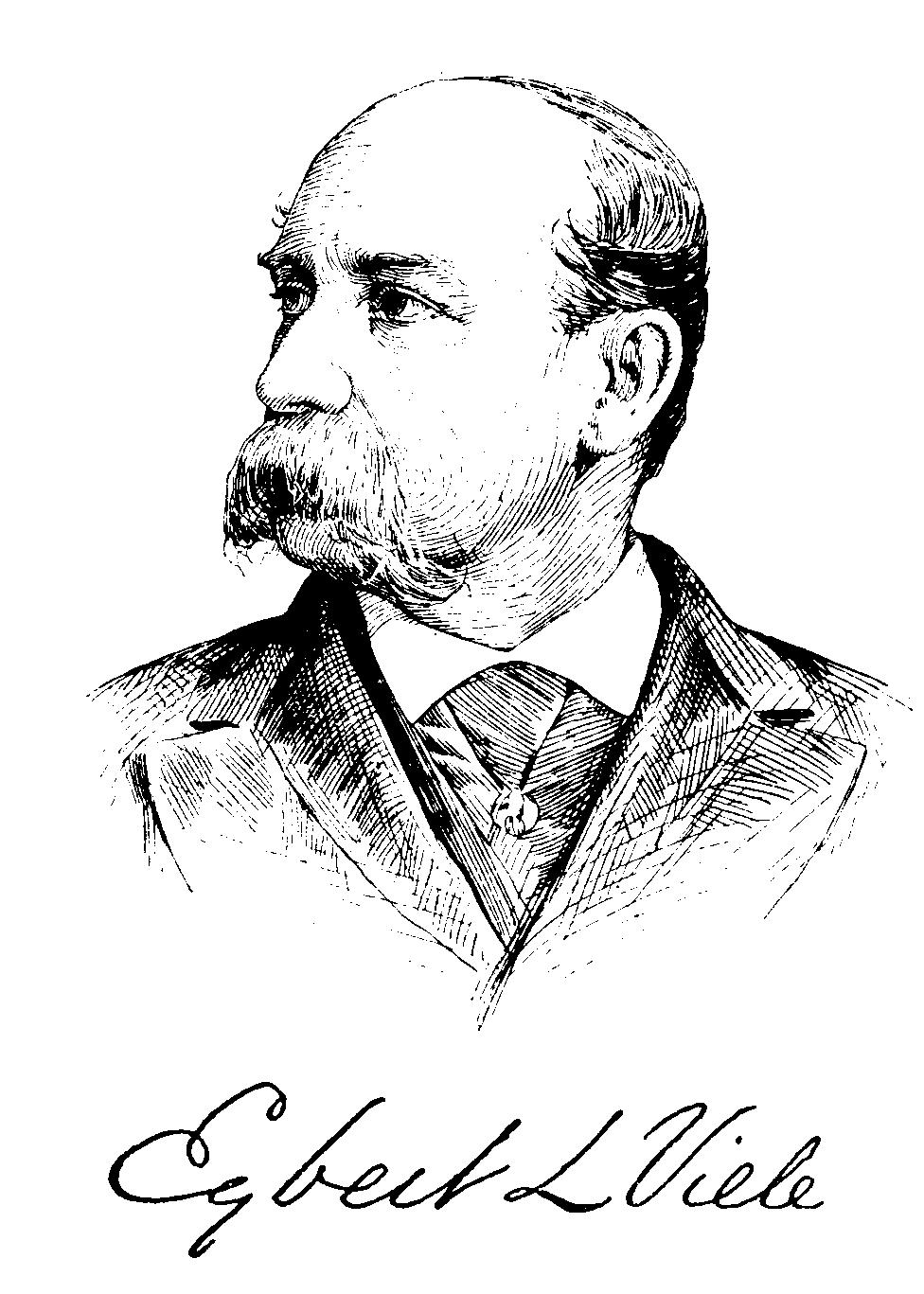
VIELE, Arnaud Cornelius, colonist, born in Brabant, Netherlands, about 1620; died in New York city about 1700. He came to this country with his father about 1630, and the latter erected an Indian trading-house at Fort Orange (now Albany, New York). Arnaud grew up with the young Indians that accompanied their chiefs on the trading expeditions, and the friendships that he formed with them continued for half a century, and proved a lasting benefit to the colonists. His familiarity with the dialect and character of the Indians led to his becoming an interpreter between the government and the natives, and nearly all the treaties with the Indians for many years bear his signature. Governor Thomas Dongan sent Viele as a special envoy to the Iroquois, and Governor Jacob Leisler made him governor of the Six Nations. He was at the council of Onondaga when, at the instigation of the Canadian authorities, the Iroquois tribes were assembled to decide whether the English or French should have their allegiance. Upon the decision depended the fate of the colony, and had it not been for the long friendship of the Indians with Viele, they would have transferred their support to the French.--His kinsman, John Ludovickus, lawyer, born in Washington county, New York, 6 June, 1788; died in Albany, New York, 19 October, 1832, entered Union, but left to serve in the war of 1812, then studied law, was admitted to the bar in 1812, and practised in Washington, Rensselaer, Saratoga, and Albany counties. He was elected to the state senate, and was associated with De Witt Clinton in the legislation concerning the Erie canal. In 1821 he was made judge of the court of errors, and in the case of the Dutch church of Albany against John M. Bradford, then its minister, Samuel Jones, president of the court, whose decisions had never before been questioned, delivered an elaborate opinion with the confident expectation that, as usual, it would be concurred in. Several other judges gave long opinions to the same effect. Judge Vide, the youngest member of the court, differed from them and the chancellor, and, much to the surprise of the latter, who often referred to the case as his only legal defeat, the court decided with Judge Viele. He was appointed inspector of the New York state militia in 1819, and regent of the University of the state of New York in 1832. On the visit of Lafayette to America, Judge Viele was chosen as the orator to receive him on his visit to the battle-field of Saratoga. His judicial opinions are published in Cowan's reports.--John L.'s son, Egbert Ludovickus, engineer, born in Water-ford, New York, 17 June, 1825, was graduated at the United States military academy in 1847, assigned to the 2d infantry, and, joining his regiment in Mexico, served under General Winfield Scott. He was then given duty on lower Rio Grande river, and was stationed at Ringgold barracks and afterward at Fort McIntosh. In 1853 he resigned, after attaining the rank of 1st lieutenant on 26 October, 1850. He then settled in New York city, where he entered on the practice of civil engineering, and in 1854'-6 was state engineer of New Jersey. In 1856 he was appointed chief engineer of Central Park, New York, and prepared the original plan that was adopted. Four years later he became chief engineer of Prospect park, Brooklyn, for which he prepared the original plan, but resigned at the beginning of the civil war. He responded to the first call for volunteers, and conducted an expedition from New York to Washington, forcing a passage up Potomac river. After serving in the defences of Washington as captain of engineers in the 7th New York regiment, he was commissioned brigadier-general of volunteers on 17 August, 1861, and directed to form a camp of instruction in Scarsdale, New York In April, 1862, he joined the South Atlantic expedition and had charge of the forces in Saran-nab river. General Vide commanded the movement that resulted in the capture of Fort Pulaski, and also took Norfolk and its navy-yard, becoming military governor of that city from its capture in May, 1862, until October, 1863. After superintending the draft in northern Ohio, he resigned on 20 October, 1863, and resumed his engineering practice. In 1883 he was appointed commissioner of parks for New York city, and in 1884 he was president of the department. He was elected as a Democrat to congress in 1884, but he was defeated in his canvass for re-election in 1886. General Viele is president of the Equitable home building association, for building houses in the vicinity of Prospect park, Brooklyn, to be sold to tenants who agree to use them as homes only. Besides papers on engineering, sanitation, and physical geography, he has published a "Hand-Book for Active Service" (New York, 1861), and a "Topographical Atlas of the City of New York" (1865).
Unauthorized Site:
This site and its contents are not affiliated, connected,
associated with or authorized by the individual, family,
friends, or trademarked entities utilizing any part or
the subject's entire name. Any official or affiliated
sites that are related to this subject will be hyper
linked below upon submission
and Evisum, Inc. review.
Please join us in our mission to incorporate The Congressional Evolution of the United States of America discovery-based curriculum into the classroom of every primary and secondary school in the United States of America by July 2, 2026, the nation’s 250th birthday. , the United States of America: We The
People. Click Here